 Drseervi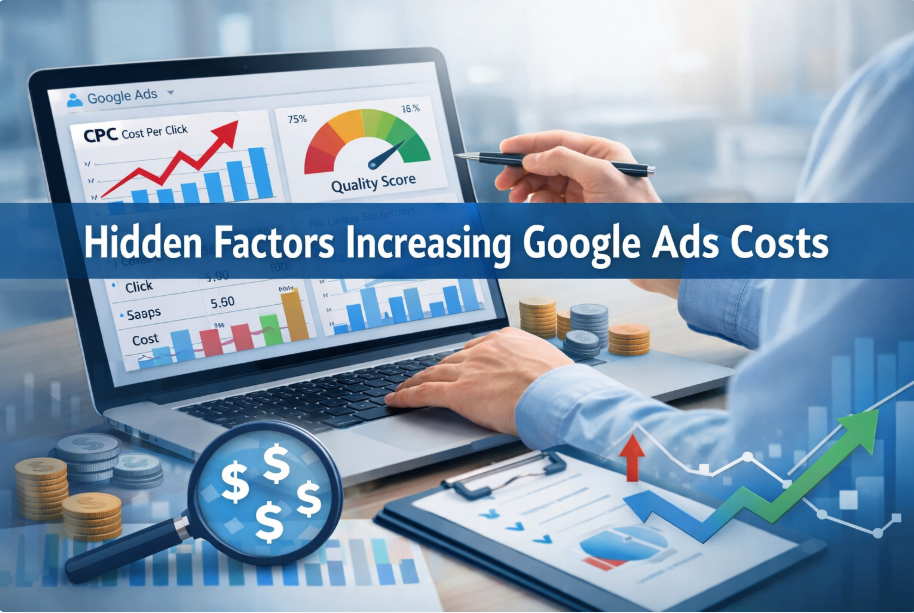
Many businesses step into paid search expecting Google Ads costs to be straightforward. Set a budget, choose keywords, and pay per click. In reality, the platform is influenced by dozens of variables that quietly push the cost of Google Ads over time. While rising competition is an obvious reason, several hidden factors often have a greater impact on how much advertisers end up paying. Understanding these elements can help businesses control spending and improve results without increasing budgets.
Low Quality Score And Its Cost Impact
One of the biggest cost drivers in Google Ads is Quality Score. This measure assesses the relevance and utility of your advertisements to users. It is influenced by expected click-through rate, ad relevance, and landing page experience. A low-Quality Score forces advertisers to bid more just to remain competitive.
Even small issues can lower this score. Poor keyword grouping, generic ad copy, or slow-loading landing pages all reduce relevance. When Quality Score drops, cost per click rises, sometimes dramatically. Improving relevance and user experience often reduces costs faster than raising bids.
Poor Keyword Match Types
Many advertisers rely heavily on broad match keywords without realising how much they inflate spending. Broad match allows ads to appear for loosely related searches, including those with low intent. This leads to clicks from users who are unlikely to convert.
While broad match can increase reach, it often attracts unqualified traffic. Over time, this increases wasted spend and raises average costs. Using phrase and exact match keywords, along with a strong negative keyword list, helps control which searches trigger ads and reduces unnecessary clicks.
Weak Landing Page Experience
Landing pages play a major role in determining both Quality Score and conversion rates. Pages that load slowly, lack clear messaging, or do not align with the ad copy signal a poor experience to Google. This results in higher costs per click and lower ad visibility.
A common mistake is sending all traffic to a generic homepage rather than a page designed for a specific campaign. When users cannot immediately find what they searched for, they leave quickly. This behaviour increases bounce rates and quietly drives up advertising costs.
Ignoring Negative Keywords
Despite being one of the best tools for spending control, negative keywords are frequently disregarded. Without them, ads can appear for irrelevant or research-based searches that bring clicks but no conversions.
For example, words like free, cheap, jobs, or reviews may trigger ads unintentionally. Over time, these clicks add up and increase overall costs without delivering value. Regularly reviewing search term reports and adding negative keywords helps eliminate wasted spend and improve efficiency.
Increased Competition From Automated Bidding
Automated bidding strategies, such as target CPA or maximise conversions, are widely used. While they can be effective, they also intensify competition. When multiple advertisers rely on automation, bids can rise quickly as algorithms compete for the same audiences.
This bidding pressure often increases costs in competitive industries. Businesses that set aggressive targets without enough conversion data may see costs rise without improved performance. Monitoring automated bidding closely and adjusting goals realistically helps prevent unnecessary cost inflation.
Poor Account Structure
A cluttered or outdated account structure makes it harder for Google to understand relevance. Campaigns with too many keywords, mixed themes, or overlapping audiences reduce clarity. This confusion leads to lower performance and higher costs.
Well-organised accounts with tightly themed ad groups allow for more relevant ads and better optimisation. A clean structure improves Quality Score, increases click-through rates, and lowers cost per click over time.
Geographic And Device Targeting Issues
Improper location or device targeting can silently increase costs. Showing ads in areas where services are unavailable or where competition is extremely high wastes budget. Similarly, failing to adjust bids for mobile or desktop users can lead to inefficient spending.
For example, if mobile users convert at a lower rate but receive the same bids as desktop users, costs increase without proportional returns. Regularly analysing performance by location and device allows for smarter bid adjustments and better budget allocation.
Ad Fatigue And Outdated Creatives
Ads that run unchanged for long periods often experience declining performance. Users become less responsive, click-through rates drop, and costs rise as relevance decreases. This phenomenon, known as ad fatigue, affects even well-designed campaigns.
Refreshing ad copy, testing new headlines, and aligning messaging with seasonal or market trends keep engagement high. Active testing prevents performance decline and helps maintain lower costs.
Final Thoughts
The cost of Google Ads is shaped by far more than keyword competition alone. Quality Score, landing page experience, keyword strategy, and account management all play critical roles in determining how much advertisers pay. Many of these factors operate quietly in the background, making them easy to overlook. By identifying and addressing these hidden influences, businesses can reduce wasted spend, improve performance, and gain more value from their advertising budgets. Smart optimisation often lowers costs without sacrificing visibility, proving that success in Google Ads is less about spending more and more and more about managing campaigns better.